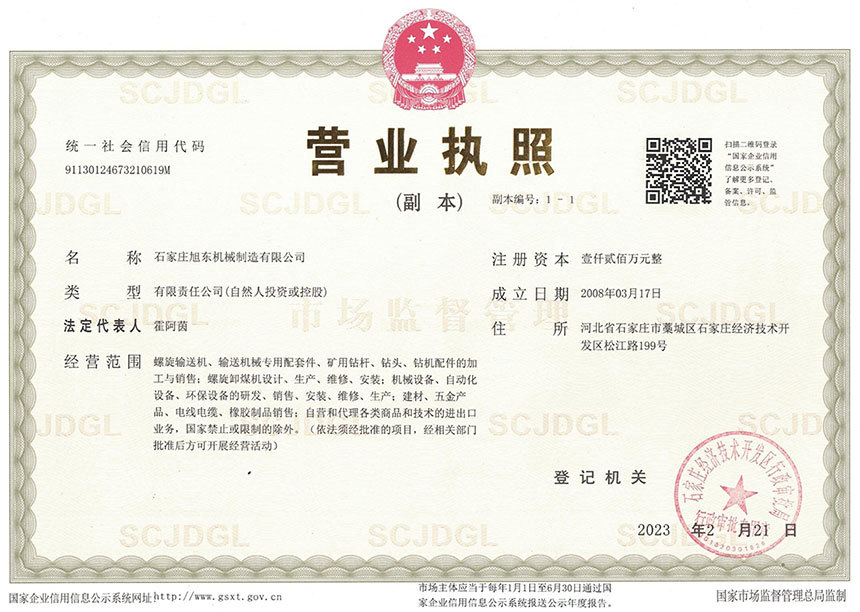
Xudong Machinery Manufacturing

Jan 10,2022

Do you really understand the spiral conveyor?

Do you really understand the spiral conveyor?
The screw conveyor, whether judged by its name or its compact physical structure, often gives users the mistaken impression that it may look impressive but isn’t very practical. However, this couldn’t be further from the truth—it’s a device that uses the rotation of a helical shaft to efficiently convey materials, capable of handling both horizontal and inclined movements. Let’s now take a closer look at its structure and unique features!

Learn more

Jul 28,2022

The Structural Principles and Application Scope of the Screw Auger Conveyor

The Structural Principles and Application Scope of the Screw Auger Conveyor
The main body of the screw conveyor consists of three sections: the head section, the intermediate section, and the tail section. Typically, during final assembly at the factory, the intermediate sections are arranged in order of length—starting with the longest one placed closest to the head section, while intermediate sections of equal length are positioned next to each other. Inside the head section, a thrust bearing is installed to handle axial forces, while the intermediate and tail sections house support bearings that hold the helical shaft in place. Additionally, the tail section includes a radially adjustable bearing capable of axial movement, designed to compensate for any inaccuracies in the helical shaft’s length and accommodate thermal expansion or contraction. The helical flights come in two types: solid (S-type) and belt-type (D-type). The individual helical shafts are connected using flanged joints, ensuring interchangeability of the connecting shafts and simplifying maintenance.

Learn more

May 12,2026

Advantages of the shaftless screw conveyor

Advantages of the shaftless screw conveyor

Learn more

The Relationship Between Double-Blade Augers and Single-Blade Augers

Theoretically, if the pitch is the same, a twin-blade screw conveyor and a single-blade screw conveyor should deliver material at the same rate—and at the same rotational speed. After all, the amount of material discharged per revolution is directly tied to both the pitch and the speed. In practice, however, there are differences in leakage due to clearance gaps. The twin-blade screw conveyor experiences less material loss, resulting in slightly more consistent output. Additionally, while the single-screw conveyor discharges material once per full rotation, the twin-screw conveyor delivers material twice per rotation—each time dispensing half the amount compared to the single-screw model. This design effectively addresses the issue of uneven material distribution.

31

2024/08

When processing spiral blades, be sure to pay attention to electrical safety.

Electricity is like a tiger—once it bites, it won’t let go. No matter what we’re doing, we must take proper precautions to prevent electric shocks. 1. Switches must be insulated and their installation should be secure. After finishing work, always check whether the power switch is turned off. 2. Before opening any electrical cabinet, make sure the power supply is completely isolated from the equipment. The main power source for the device must be switched off, and a clear "Do Not Enter—Unauthorized Personnel Only" sign should be posted on the equipment.

31

2024/08

Regarding the use of sludge dewatering machines

The screw-type sludge dewatering machine, a commonly used piece of equipment in the wastewater treatment field, has gained widespread adoption due to its efficient and reliable performance. To ensure the equipment fully leverages its advantages, it is particularly important to thoroughly understand the operating procedures and key precautions before use.

31

2024/08

Mining machinery, biomass power plant, cantilever shaft, helical shaft with helix

The properties of biomass also cause severe wear on the blades at the head of the screw feeder. After a period of operation, the circumference of these blades tends to decrease, significantly reducing the material-handling efficiency. This often leads to uneven feeding, material bridging, and even blockages—issues that can disrupt the stable operation of the boiler. Based on the wear cycle, it’s recommended to replace the screw feeder blades annually, or alternatively, to repair them every six months by patching, rebuilding the wear-resistant layer through re-welding, and reinforcing the root welds. This proactive maintenance helps prevent blade tilting, cracking, or detachment due to inadequate upkeep.

12

2021/11

The cutterhead auger of the harvester comes in two materials: iron and aluminum.

The iron cutterhead auger is a traditional option. It’s sturdy, durable, and affordable, capable of handling heavier loads and higher operational intensity. At the same time, iron augers exhibit excellent wear resistance even in harsher environments, making them still a popular choice for certain specialized harvesting tasks. However, the iron cutterhead auger also has some notable drawbacks, such as its heavy weight and susceptibility to rust—issues that require extra care during use.

12

2021/11

The material of the screw conveyor shaft can vary widely, depending on the specific application requirements and environmental conditions. Here are some common materials for screw conveyor shafts along with their key features:

Stainless Steel: One of the commonly used materials for auger shafts is stainless steel, particularly grades 304 and 316. These materials offer excellent corrosion resistance and wear resistance, making them ideal for applications in food processing, pharmaceuticals, and other industries—while also meeting stringent hygiene and safety standards. PEEK Material: PEEK is a specialized engineering plastic known for its high rigidity, strength, and hardness, as well as outstanding chemical resistance and superior performance under high-temperature conditions. Auger shafts made from PEEK are perfectly suited for environments that demand exceptional resistance to both corrosion and abrasion.

12

2021/11

How to Choose Materials for Chemical Mixer Agitators and Stirring Shafts

The properties of the agitation medium—such as viscosity, density, corrosiveness, and temperature—directly influence the selection of materials for both the agitator and the agitator shaft. The shape and size of the agitator also play a crucial role: different agitator designs are suited to specific types of media, requiring careful material selection based on the intended agitator configuration. Finally, the operating conditions of the mixer—including factors like rotational speed, power requirements, and duration of operation—can significantly impact the choice of materials for both the agitator and the shaft.

09

2021/11